


Twenty years after Hurricane Katrina, New Orleans seduces anew with songs in the key of life
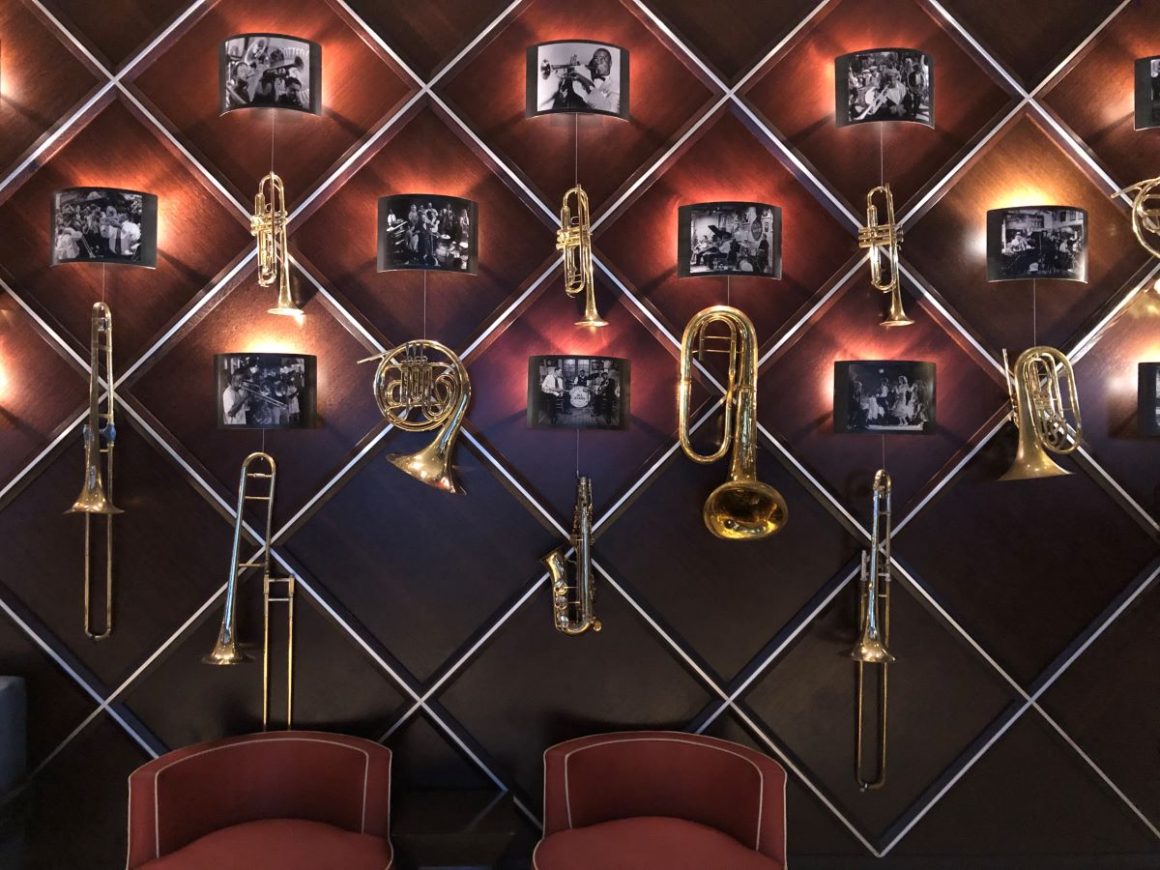
In the foyer of the New Orleans Pere Marquette Hotel, a stone’s throw from the French Quarter, is an installation of horns salvaged from the debris of Hurricane Katrina which blew suede shoes 20 years ago this month. Called “Jazz Ensemble”, it curates trumpets, cornets, trombones, saxophones … scratched, dented, tarnished, worn. But all of them, you sense, waiting for someone to count them back in.
Says visual artist Benjamin Bullins, who recycles hand saws, licence plates and bicycles as well as abandoned musical instruments, “If these instruments could talk, they’d speak of resilience. The broken bits, rub marks, tape and wire I leave as is. They are part of the character of each piece.”
The 1925 Pere Marquette Building was one of New Orleans’ first skyscrapers. Each floor celebrates a legendary jazz musician. I’m on Charlie “Yardbird” Parker’s floor. Piped jazz is the hotel’s backing track 24/7. Expect live music or a DJ in the foyer.
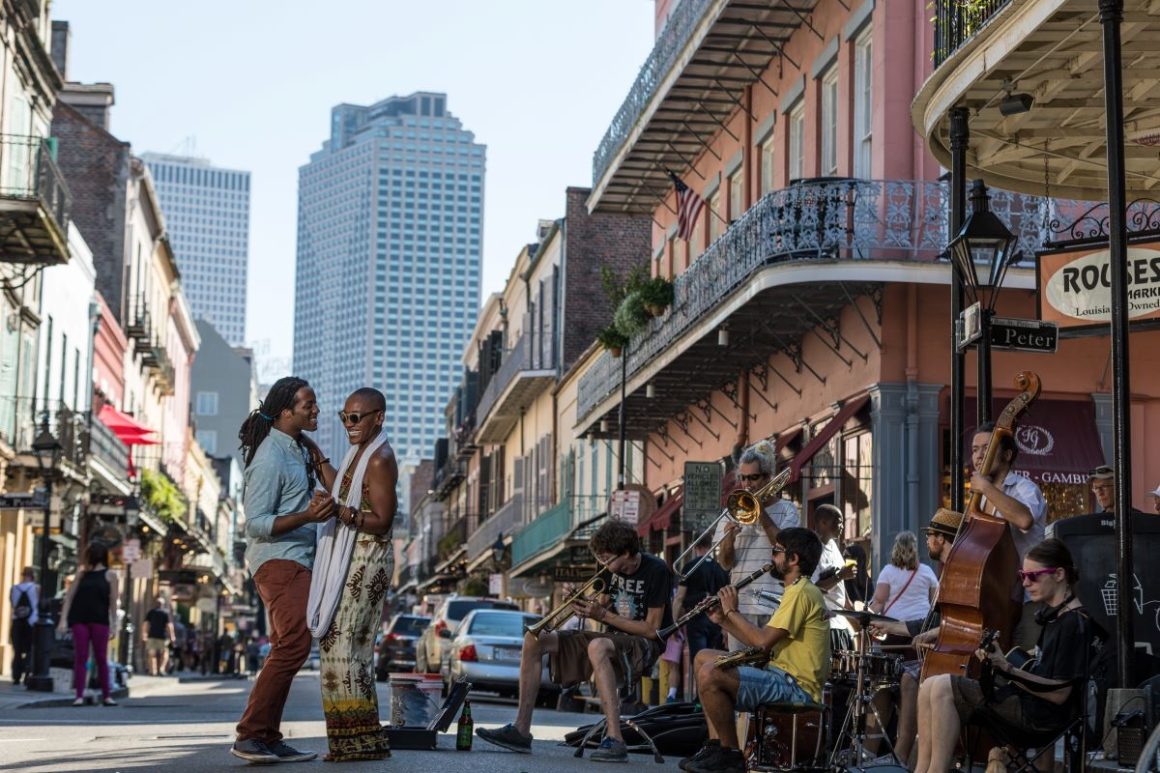
Busking fit to burst in Royal Street. Photo: Zack Smith
Music has long been the glue that holds New Orleans together. Never more so than during Katrina rehab.
I have unfinished business in this city. A tour to American gospel hotspots with a choir led by acclaimed New Zealand-Australian acapella choirmaster, Tony Backhouse, was cut short by Hurricane Katrina. In a convoy of 12 taxis, we evacuated to Memphis in the early hours of Sunday, August 28. There would be no going back.
When I finally do, the wish-list is long. Mahogany Jazz Hall; Preservation Hall; Snug Harbor, dba, the Spotted Cat, and the Blue Nile in Frenchman Street; maybe Fritzel’s in Bourbon Street, and any venue that’s not playing Gloria Gaynor’s I Will Survive and other ’70s covers.
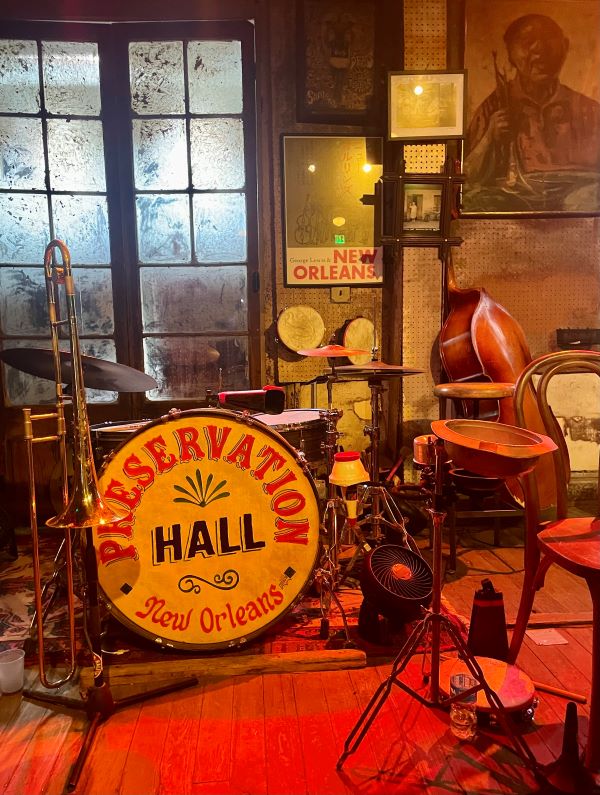
Preservation Hall, a mandatory no-frills New Orleans pit stop
I get cracking. This is not a city in which to be a bystander. You jump right in.
Counting the beat
Big Sam Williams (who played himself in four episodes of the TV series, Treme) is at the Jazz Playhouse with his Funky Nation. Pianist Rickie Monie is all but bouncing off the keys at Preservation Hall. A big brass band has taken over a block in the French Quarter. A guitarist plugs into an amp on the back of a ute. Two teenage boys drum upturned buckets.

Big Sam Williams (who appeared as himself in the TV series, Treme) plays with Funky Nation at the Jazz Playhouse
Someone, somewhere, will be reprising the songs of New Orleans’s musical trailblazers: Louis Armstrong, Fats Domino, Allen Toussaint, Professor Longhair, the Neville Brothers, Dr John.
In July, the now annual Essence Festival of Culture drew music lovers from all over. Gigs at Caesar’s Superdome included Lauryn Hill, Boyz II Men, Maxwell, GloRilla, Isley Brothers and Coco Jones. Frenchman Street is jumping fit to burst.
The Dew Drop Inn, which accommodated players in the civil rights movement, is debuting its sold-out Saturday brunch show, Legends of the Dew Drop: Road to Rock & Roll, showcasing the songs of Little Richard, Dave Bartholomew and Ray Charles.
Vue Orleans, in a tower by the Mississippi River that houses the new US$500m Four Seasons hotel, is a high tech interactive cultural space with an exhibit that explains each of the city’s music genres: traditional and contemporary jazz, rhythm’n’blues, brass bands, funk, rap and bounce, and classical music. With cool examples of each.
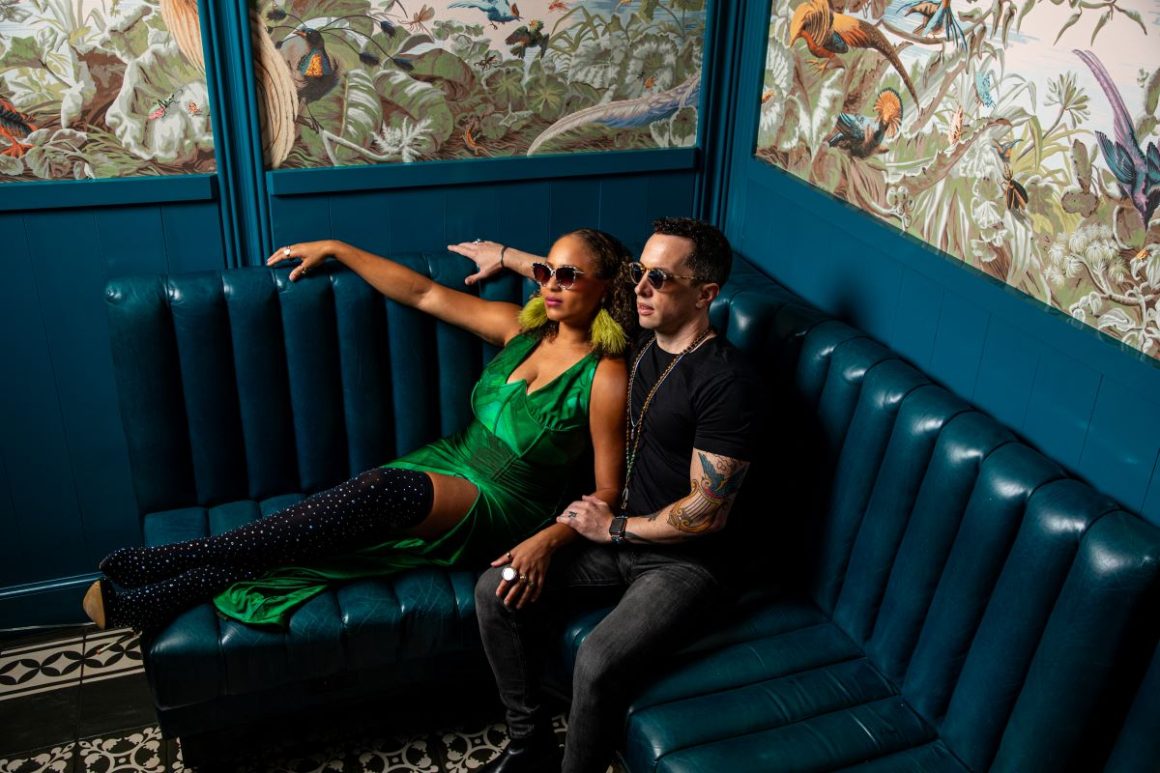
Da Lovebirds: Robin Barnes with husband musician Pat Casey at the Peacock Room.
In the Kimpton Hotel Fontenot’s exotic Peacock Room, Robin Barnes is circulating. The audience, dressed to kill and sipping cocktails, become her de facto back-up singers. Suddenly “the songbird of New Orleans” is sitting at my table. If New Orleans were a song, I ask her, what would it be? Without missing a beat she says, Do You Know What it is To Miss New Orleans. “It captures the warmth, love and spirit of the place,” she says. “With so much loss, we’ve learnt the value of today. That’s why we celebrate everything.”
Rocking the rehab
This steamy town with its oversized personality is one out of the box. As Times-Picayune reporter Chris Rose noted in his book 1 Dead in Attic: “All this funk, the eccentricity, this otherness … You probably already know that we talk funny, and listen to strange music, and eat things you’d probably hire an exterminator to get out of your yard …”
Post Katrina, New Orleans is finding a way to balance wanting to forget and wanting to be remembered. Tom Piazza, author of Why New Orleans Matters, says one of the most important lessons the city has to offer is: “Go with what is. Use what happens.”
What’s happened are new industries and people. Bioscience, digital media, tech start-ups, and art initiatives have brought a more college-educated demographic with expectations of almond milk.
The billion-dollar clean-up has delivered a new airport, more diversity on the dining front, high-end hotels, an annual New Orleans Fashion Week run by fabulous fashionista Tracee Dundas, and big-ticket events like the Super Bowl and Taylor Swift.
Gumbo, New Orleans’ signature dish
New Orleans is pursuing a UNESCO City for Music designation. And things are hotting up on the culinary front. The Michelin Guide will expand this year to cover the American South, including New Orleans. The city is hosting, next year, the Bocuse d’Or Americas competition and the Pastry World Cup. Much is being made of the fact that a Mexican restaurant in Dauphine Street called Acamaya has received two stars from New York Times food critics.
Living history
The damages bill since Hurricane Katrina has topped $US200 billion. One quarter of housing stock was abandoned. The Federal government, in association with the state of Louisiana, spent some $15 billion rebuilding a series of drainage canals, water pumping stations and levees that attempt to protect local households from storms, projects that, ironically, may be now contributing to land subsidence. The state is expected to spend $50 billion in maintenance over the next 50 years.
The tragedy that was Hurricane Katrina and its wash-up is now a part of its history. With tours.

Louisiana marsh life, scaled up!
New Orleans Green Tours’ listing, A Walk Below Sea Level, canvasses the history of water and its management, post-disaster recovery and lessons learned.
At the Historic New Orleans Collection campus, curator and senior historian Jason Weiss introduces A Vanishing Bounty: Louisiana’s Coastal Environment and Culture, its focus the region’s abundance of natural life and the threats it faces. Learn about the lifecycle of a crawfish, and – twitcher alert! – view the rare second edition of John James Audubon’s double-elephant folio, The Birds of America.
The best way to walk off a jazz brunch at the legendary restaurant, Commander’s Palace, is with Robert Bell’s Gracious Garden District Tour. It is real estate porn. These houses are dreamy, several the legacy of architects Henry Howard, James Freret or James Gallier Jr. Brad Pitt, Sandra Bullock, Anne Rice, John Goodman, and Nicolas Cage have lived in the ‘hood and Bell has sooo much good goss.
The legendary celebration hangout, Commander’s Palace, in the Garden District
New Orleans is a city below sea level. Robert Florence (Historic New Orleans Tours, expertise: cemeteries) shares an in-depth perspective on wetlands, flood walls, levees, pumping stations and the merits of Dutch engineering with a tour that takes in the low-lying areas the world saw swamped in 2005.
Says Ti Adelaide Martin, co-proprietor of Commander’s Palace, “As we began 2005, New Orleans had zero idea of what we were capable of. We couldn’t have predicted that ‘resilience’ would come to embody our mindset and community outlook. The physical flood, the death toll, the uprooted lives felt like a knockout punch. But the down-and-out boxer got up and found something within he didn’t know he had.”
Habitat for Humanity steered the housing for homeless musicians project post Katrina
We drive through the Musicians Village in the Upper Ninth Ward, a project by the international affordable-housing charity Habitat for Humanity, spearheaded by musicians Harry Connick Jr and Branford Marsalis, to provide a roof over the heads of displaced musicians.
One of them was singer Margie Perez, who grabbed clothes and a purple hula hoop when she fled the flood. She thought she might kill time learning to shimmy during the few days she expected to be away. Twenty years later, it’s still in her living room. A talisman of sorts.
When we knock, she is prepping for a raft of gigs. “Music heals, music redeems, it keeps me alive,” Perez says, “I feel so privileged to be able to make music in this town.”
Horn players hit the French Quarter during the Essence Festival
The writer was a guest of New Orleans & Company. This story first appeared in The Australian newspaper’s Travel & Luxury section, 23-24 August 2025


'I got the music in me | New Orleans pumps up the jam | The Big Easy? Easy!' has no comments
Be the first to comment this post!